I am a Professor at the Université de Lorraine and a researcher in computer vision at LORIA (UMR 7503). Since the early 2000s, my work has focused on augmented reality, in particular on visual localization and real-time tracking at the intersection of robotics and perception. I have worked on SLAM, multimodal data fusion, and automatic reconstruction in complex environments. This research was distinguished by a 10-Year Lasting Impact Award at ISMAR.
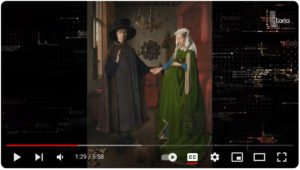
More recently, I have been exploring the contribution of artificial intelligence methods — deep neural networks, Gaussian Splatting, and multimodal vision models — across a range of applications. Part of my work now lies in the field of digital humanities, where I apply these approaches to questions in art history, in particular regarding perspective practices and optical techniques among the Early Flemish painters. I am also co-author, with the art historian Ludovic Balavoine, of a book published in February 2026 by Brepols on these topics.
Since January 2026, I have been Scientific Coordinator of the AI Grand Est ENACT Cluster, an initiative supported by France 2030 that aims to structure a regional AI ecosystem by fostering synergies between research, education, and innovation. I am also co-facilitator of the “Museums and Heritage” sector of the PEPR ICCARE, a national programme funded under France 2030 and dedicated to research projects at the intersection of digital technologies and the cultural and creative industries.
I teach in the Computer Science Department at the Faculty of Science and Technology in Nancy, where I am involved in courses on computer vision and artificial intelligence within the Master’s programme in Computer Science.