Computer Vision & AI Researcher, Université de Lorraine

I am a Professor at the Université de Lorraine and a researcher in computer vision at LORIA (UMR 7503). Since the early 2000s, my work has focused on augmented reality, in particular on visual localization and real-time tracking at the intersection of robotics and perception. I have worked on SLAM, multimodal data fusion, and automatic reconstruction in complex environments. This research was distinguished by a 10-Year Lasting Impact Award at ISMAR.

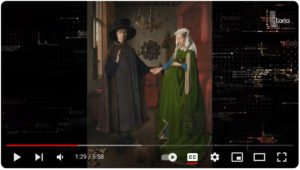
More recently, I have been exploring the contribution of artificial intelligence methods — deep neural networks, Gaussian Splatting, and multimodal vision models — across a range of applications. Part of my work now lies in the field of digital humanities, where I apply these approaches to questions in art history, in particular regarding perspective practices and optical techniques among the Early Flemish painters. I am also co-author, with the art historian Ludovic Balavoine, of a book published in February 2026 by Brepols on these topics.

Since January 2026, I have been Scientific Coordinator of the ENACT Grand Est AI Cluster, an initiative supported by France 2030 that aims to structure a regional AI ecosystem by fostering synergies between research, education, and innovation. I am also co-facilitator of the “Museums and Heritage” sector of the PEPR ICCARE, a national programme funded under France 2030 and dedicated to research projects at the intersection of digital technologies and the cultural and creative industries.

I teach in the Computer Science Department at the Faculty of Science and Technology in Nancy, where I am involved in courses on computer vision and artificial intelligence within the Master’s programme in Computer Science.

Quelle place pour la Réalité Augmentée dans l’Industrie 4.0 ?

Aux côtés de l’impression 3D, l’internet des objets et la communication machine-à-machine, la Réalité Augmentée fait partie des technologies émergentes à l’origine du concept d’industrie 4.0. Dans un contexte de digitalisation croissante de l’usine, allant des objets manufacturés aux machines outils en passant par les processus de fabrication, la RA est l’outil le plus à même de faire le lien, visuellement, entre la connaissance numérique et la réalité physique de l’opérateur humain.

Lire la suite